Two LED spotlights with similar wattages, yet completely different lighting effects: While one illuminates large areas, the other creates a small, intense lighting accent. When selecting the right spotlight, electrical power alone is therefore not enough. Photometric specifications provide more useful information. However, what is the difference between lumens, lux and candela? And which values really help when planning lighting for stages, trade shows or events?
Contents
- 1. Lumens, Lux and Candela: The Differences at a Glance
- 2. Lumens: How Much Light Does a Spotlight Emit?
- 3. Candela: How Strongly Is Light Concentrated in One Direction?
- 4. Lux: How Much Light Reaches a Surface?
- 5. Calculating Lux: Two Simple Examples
- 6. From Candela to Lux: The Effect of Distance
- 7. Can Lumens, Lux and Candela Be Converted Directly?
- 8. Which Specifications Matter for LED Spotlights?
- 9. How to Compare LED Spotlights Effectively
- 10. Conclusion
1. Lumens, Lux and Candela: The Differences at a Glance
The three units describe different aspects of light: Lumens measure luminous flux, candela measures luminous intensity in a specific direction and lux measures illuminance on a surface.
| Unit | Measured Quantity | What Does It Describe? | Significance for LED Spotlights |
|---|---|---|---|
| Lumen (lm) | Luminous flux Φ | How much visible light is emitted in total | Total light output, regardless of its spatial distribution |
| Candela (cd) | Luminous intensity I | How much light is emitted per unit of solid angle in a specific direction | Concentration and intensity, for example, along the beam axis |
| Lux (lx) | Illuminance E | How much luminous flux reaches a surface per square meter | Illumination at the installation site at a specific distance and setting |
In simple terms, the relationship can be summarized as follows: Lumens describe light output, candela describes its distribution in a particular direction and lux describes the result on the illuminated surface.
2. Lumens: How Much Light Does a Spotlight Emit?
Luminous flux is measured in lumens. It describes the emitted visible radiation, weighted according to the spectral sensitivity of the human eye. Different light colors therefore contribute differently to the lumen value, even at the same radiant power.
A high luminous flux initially means that a large amount of light is emitted. However, it does not indicate how that light is distributed. Two spotlights can have the same luminous flux yet produce very different illuminance levels on a stage: One distributes its light over a wide area, while the other concentrates it into a narrow beam.
For comparison purposes, it is also important to know what the specified value refers to. The luminous flux of an LED module and the luminous flux of the complete spotlight are two different specifications. Lenses, reflectors and other optical components influence how much light actually leaves the fixture. A clearly specified luminous flux value for the complete spotlight is therefore particularly useful.
3. Candela: How Strongly Is Light Concentrated in One Direction?
Luminous intensity, measured in candela, describes luminous flux per unit of solid angle in a specific direction. A solid angle is the three-dimensional equivalent of a plane angle, and its unit is the steradian (sr). The relationship is: 1 cd = 1 lm/sr.
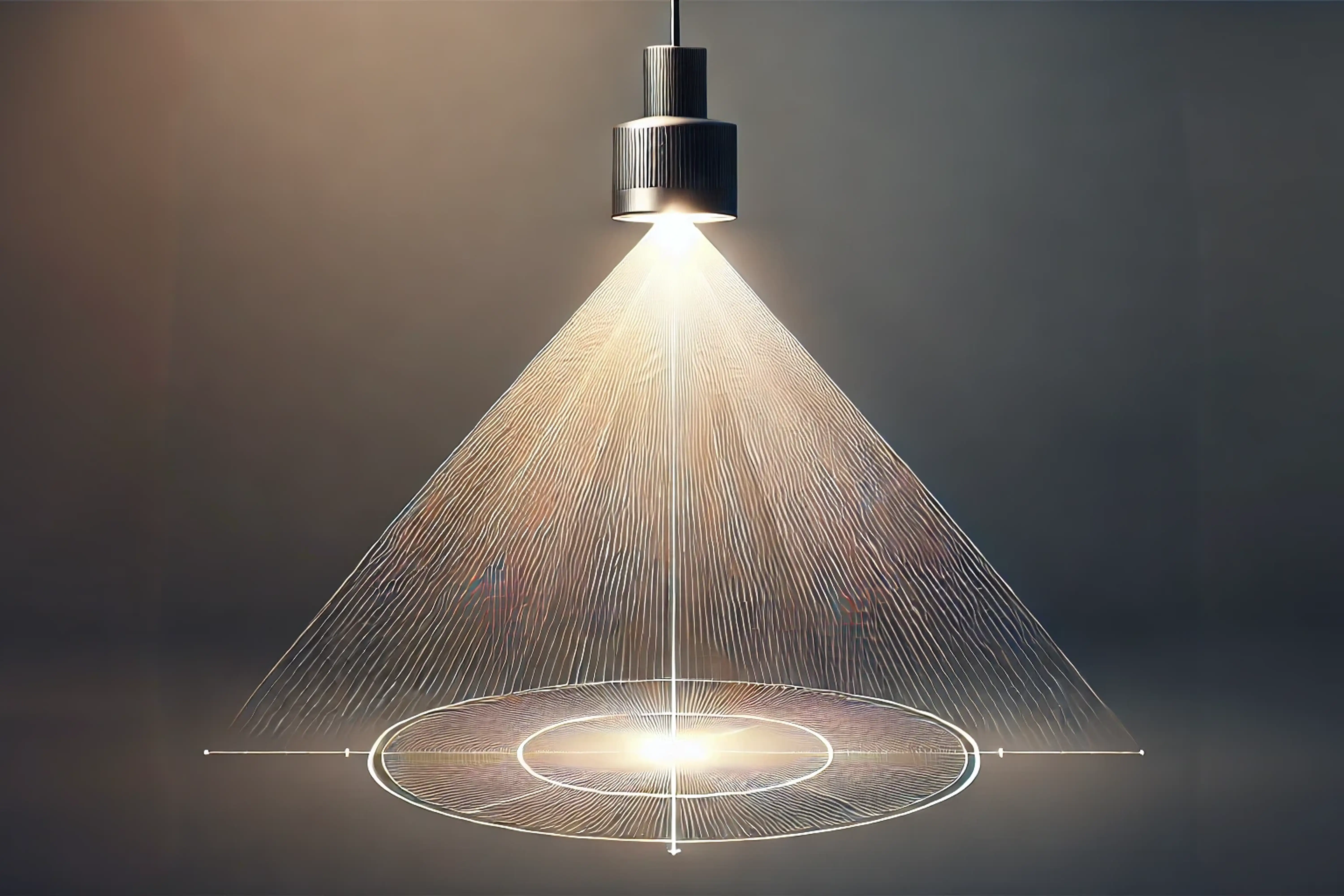
In practical terms, this means that concentrating the same luminous flux into a smaller solid angle increases the average luminous intensity within that angle. A tightly focused beam can, therefore, achieve high candela values without emitting more light overall than a wide-angle wash spotlight.
Luminous intensity can also vary within a beam of light. A candela value measured along the beam axis therefore does not automatically describe the entire beam. A luminous intensity distribution diagram provides a more detailed picture of how the light is distributed in different directions.
4. Lux: How Much Light Reaches a Surface?
Illuminance, measured in lux, describes the luminous flux reaching a surface per square meter. One lux is equivalent to one lumen per square meter. Unlike total luminous flux, this value depends on factors such as the distance and orientation of the illuminated surface.
For LED spotlights, a specification such as "5,000 lux" is, therefore, only truly useful when considered alongside the measurement conditions. At what distance was the measurement taken? At which zoom setting and light color? Does the value represent the center of the beam or an average across a surface?
A high peak value at the center does not necessarily guarantee uniform illumination. For a stage or trade show booth, the amount of light reaching areas outside the center is also important.
5. Calculating Lux: Two Simple Examples
From Luminous Flux to Average Illuminance
If the luminous flux reaching a surface is known, the average illuminance can be calculated:
Average illuminance = incident luminous flux ÷ area
A simplified example: If 2,000 lumens are distributed evenly across an area of 4 m², the result is:
2,000 lm ÷ 4 m² = 500 lx
If the same luminous flux is distributed evenly across 8 m², the illuminance drops to just 250 lux.
Important: This refers to the luminous flux that actually reaches the surface. Dividing a spotlight's total lumen value by the size of the stage does not provide a reliable result if some of the light falls outside the area. If the light is distributed unevenly, the calculation also provides only an average value.
6. From Candela to Lux: The Effect of Distance
Für eine näherungsweise punktförmige Lichtquelle gilt bei senkrechtem Lichteinfall das photometrische Abstandsgesetz:
E = I ÷ r²
Here, E is the illuminance in lux, I is the luminous intensity in candela in the direction of the measurement point, and r is the distance in meters.
A hypothetical spotlight with a luminous intensity of 10,000 candela in this direction would theoretically produce:
| Distance | Calculation | Illuminance |
|---|---|---|
| 2 m | 10,000 ÷ 2² | 2,500 lx |
| 4 m | 10,000 ÷ 4² | 625 lx |
| 8 m | 10,000 ÷ 8² | 156.25 lx |
Under these conditions, doubling the distance reduces the illuminance to one-quarter of its original value.
This calculation assumes sufficient distance from the light source and unchanged spotlight settings. At close range, large or multi-part light-emitting surfaces can produce significantly different results. Light striking a surface at an angle also reduces illuminance compared to a surface illuminated perpendicularly. Manufacturer data for the actual required distance is, therefore, particularly useful.
7. Can Lumens, Lux, and Candela Be Converted Directly?
There is no general conversion between these different units without additional information. Converting lumens to lux requires knowing the luminous flux reaching the surface and the size of that surface. Converting candela to lux depends on distance and angle of incidence.
To establish the relationship between lumens and candela, the spatial distribution of light must be known. Only when luminous intensity is uniform within a given solid angle does the simple relationship luminous flux = luminous intensity × solid angle apply. A beam angle alone does not fully describe the actual light distribution of a spotlight.
8. Which Specifications Matter for LED Spotlights?
Selecting a suitable spotlight starts with the lighting task. Creating a small lighting accent from a great distance requires different specifications than illuminating a backdrop evenly. Two examples from the Steinigke Showtechnic product range illustrate how to interpret the data:
Lumens and Lux Complement Each Other: EUROLITE LED PAR-20 3CT
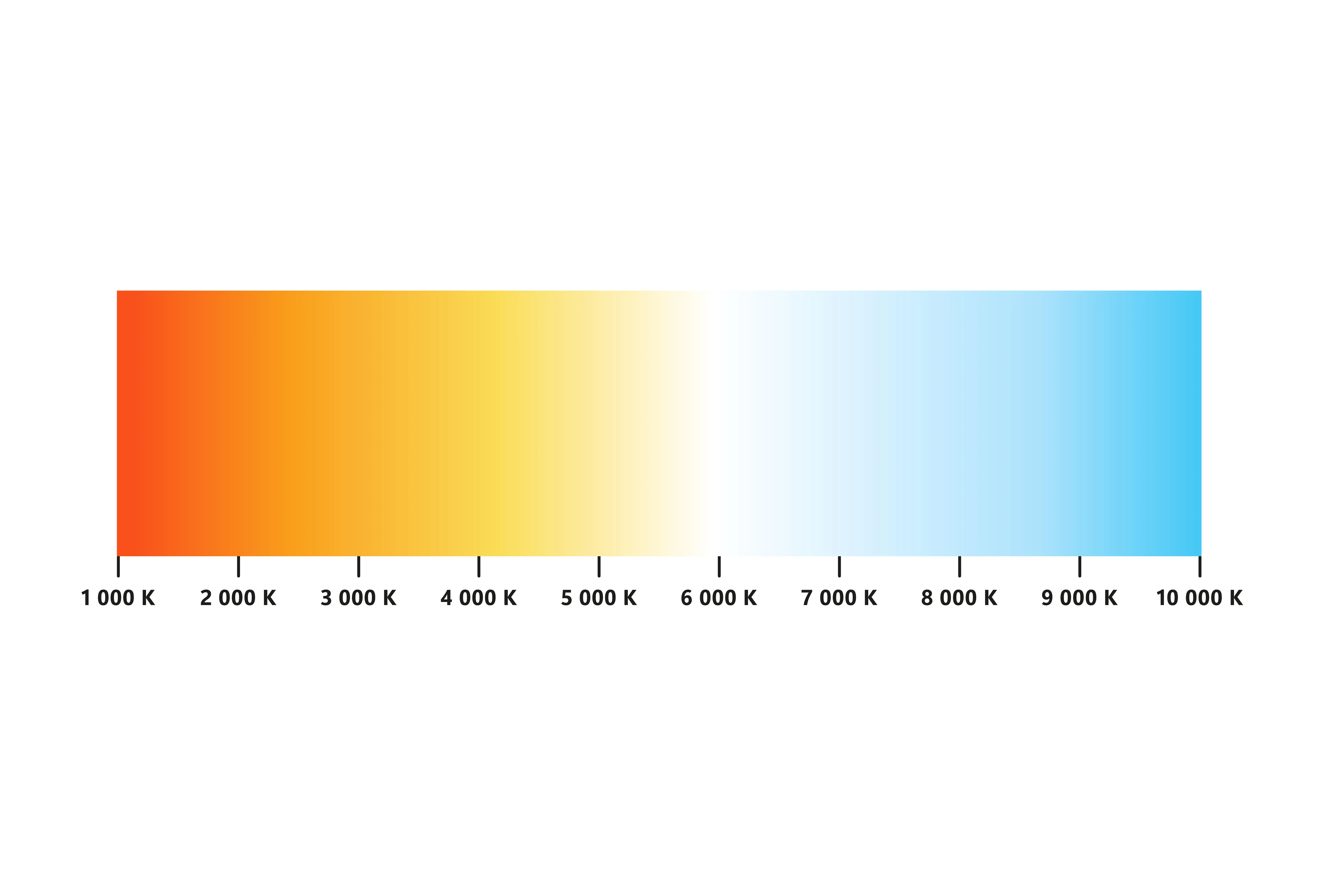
The EUROLITE LED PAR-20 3CT sw has a specified luminous flux of 800 lumens. The data sheet also provides lux values for different distances and color temperatures. At 3,000 Kelvin, for example, the values are 300 lux at a distance of 3 meters and 79 lux at 6 meters.
The lumen value describes light output, while the lux values help estimate the illuminance achieved at a given distance. The data sheet also distinguishes between a 25° beam angle at half the peak value and a 50° angle at one-tenth of the peak value. Angle specifications, therefore, also require a clearly defined reference value.
Same Spotlight, Different Beam Concentration: EUROLITE LED TMH-W400
The EUROLITE LED TMH-W400 Moving Head Wash Zoom provides a particularly clear illustration of the influence of the zoom setting:
| Setting According to Data Sheet, All Colors On | Illuminance at 3 m | Illuminance at 6 m |
|---|---|---|
| Narrow | 9,660 lx | 2,293 lx |
| Wide | 1,798 lx | 495 lx |
At the narrow setting, the lux value at 3 meters is approximately 5.4 times higher. However, this does not mean that the total luminous flux is correspondingly higher: The two settings illuminate areas of different sizes. For wide-area illumination, the wide setting may be the better choice despite its lower lux value.
9. How to Compare LED Spotlights Effectively
A meaningful comparison takes several factors into account:
- Luminous flux: Does the lumen specification refer to the complete spotlight?
- Distance: Are lux values available for the planned operating distance?
- Light distribution: Are the beam angle, beam size, and uniformity suitable for the application?
- Measurement conditions: Were the same zoom setting, light color, and operating mode used for comparison?
- Light quality: Do the color temperature and color rendering meet the requirements of the application?
Electrical power, measured in watts, supplements these specifications when planning the power supply. However, wattage alone does not indicate how much light reaches a particular point.
10. Conclusion
When selecting a spotlight for a specific application, there is a clear order to follow: First, determine the required illuminated area and operating distance. Then compare the photometric data at the appropriate settings. Lumens, lux and candela each provide a different piece of information for this process. Of course, such a comparison only makes sense if the other functions of the fixtures being compared are identical or at least do not make a significant difference for the intended application.