The 1990s were a time of major change in lighting technology. Scanners and moving heads increasingly became part of professional lighting shows, while classic effects continued to send beams, dots and moving patterns across dance floors, stages and venue ceilings.
At the same time, club culture was changing in the wake of the fall of the Berlin Wall in 1989. In Berlin in particular, vacant basements and industrial buildings became home to the emerging techno scene. Darkness, fog and hard strobe flashes shaped a minimalist lighting aesthetic in which light helped define the rhythm, sense of space and atmosphere. However, that was only one side of the 1990s. Traditional discos, mobile parties and concerts could be much more colorful and playful. Effects such as Derby, Mushroom and Breakdance, along with the much older mirror ball, were a familiar sight. They filled the room with movement, color and constantly changing light patterns.
While scanners and moving heads never really disappeared, some of these classic effect concepts temporarily faded from the spotlight. Today, they are attracting renewed attention: Modern LED technology and contemporary control options meet lighting looks that have remained surprisingly familiar.
Contents
- 1. Lamps, Lenses and Mechanics
- 2. Breakdance: Movement on Multiple Levels
- 3. Derby: Lots of Beams, Lots of Movement
- 4. Mushroom: Light in Every Direction
- 5. Water Effects: Movement Without the Rush
- 6. The Mirror Ball: Older Than Disco
- 7. Why Classic Effects Are Interesting Again Today
- Conclusion: Old Ideas, New Possibilities
1. Lamps, Lenses and Mechanics
The colorful effects of the 1990s often looked more complex than the technology behind them actually was. A powerful light source shone through lenses, onto mirrors or through color filters, while motors moved individual components. The result was beams, dots and patterns traveling across walls, ceilings and dance floors.
Halogen lamps were frequently used as the light source. Colors were created using filters, color wheels or colored lenses, while rotating mirrors or optical units provided movement. Many fixtures also featured sound activation, allowing color changes or movements to react to the beat.
However, the technology had its limitations. Halogen lamps consumed comparatively large amounts of energy, generated considerable heat and had to be replaced regularly. Moving components were also subject to mechanical wear.
Today, similar lighting looks are created with very different technology inside the fixtures. RGB and RGBW LEDs allow direct color mixing, while other LED effects continue to use color wheels or optical elements. Brightness can be controlled precisely, and functions such as dimming, strobe or DMX control can be integrated with ease. Depending on the effect, mechanical components still provide the characteristic movement.
The following classics show just how different these effect concepts can look. We begin with an effect in which movement takes place on several levels at once.
2. Breakdance: Movement on Multiple Levels
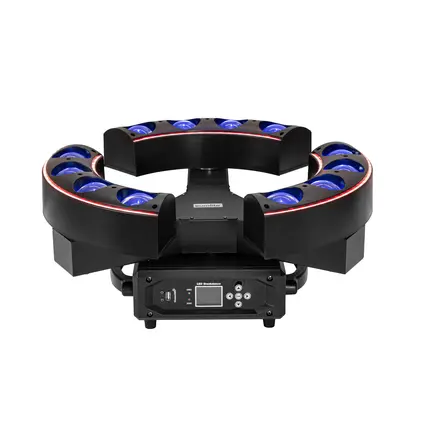
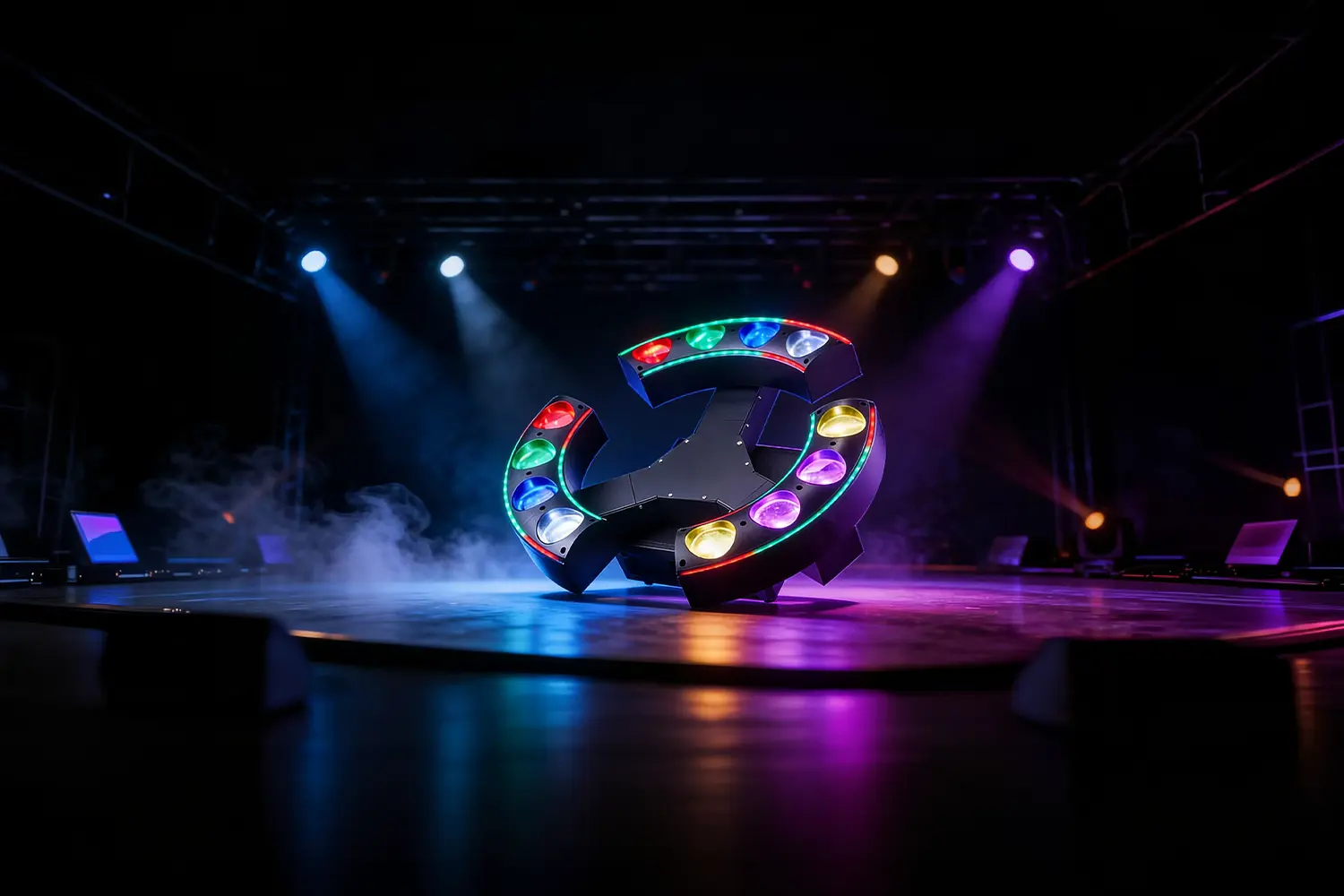
The name already hints at what the Breakdance effect is all about: movement. Rotations, rapid changes of direction and overlapping movements define the overall impression of both the dance style and the lighting effect.
Multiple light sources or optical elements move at the same time. Rotations overlap, beams constantly change direction and the lighting pattern continuously re-forms. This is what distinguishes the classic Breakdance principle from a moving head in terms of its visual impact: While a moving head often creates precisely positioned lighting looks, Breakdance focuses on the interaction of multiple movements and the overall image they create. The effect brings dynamic movement to large areas of a room and continuously generates new patterns.
Modern LED technology adds flexible color options as well as, depending on the model, individually controllable sections, dimming or strobe functions. The basic idea remains the same: Lots of movement, lots of beams and a lighting effect that is deliberately never still.
With the next classic, the focus shifts away from overlapping movements and toward the sheer number of beams.
3. Derby: Lots of Beams, Lots of Movement
While darkness, fog and strobe lighting dominated some techno clubs, traditional discos and mobile parties could be much more colorful. The Derby effect was a typical sight in these settings. Using comparatively simple technology, it spread numerous beams of light across dance floors, walls and ceilings.
Typically, the light is split into numerous beams by several lenses. As the optical system moves, the beams change position and travel through the room. The effect is particularly striking when combined with fog or haze, which makes the beams themselves visible.
Earlier Derby effects often used halogen lamps and colored optical elements. Today, LEDs allow flexible color changes as well as additional functions such as dimming or strobe.
The formula remains the same. Numerous beams, bold colors and constant movement allow even a single effect to bring large areas of a room visually to life. The next classic spreads the light even more widely.
4. Mushroom: Light in Every Direction
Mushroom effects were also a familiar part of colorful disco and party lighting. While a Derby effect sends numerous individual beams into the room, a Mushroom creates a widely dispersed lighting pattern that reaches in all directions. Depending on the design, multiple lenses direct the light in different directions.
As the optical system rotates, dots of light and beams travel across walls, ceilings, and the dance floor. In discos, party rooms, and mobile applications in particular, even a single effect could significantly change the visual impression of the space.
Depending on the design, classic versions used halogen lamps, color wheels or colored lenses. Today, LEDs provide flexible color options and additional control functions. However, the characteristic lighting pattern is still created through the interaction of light, optics and movement.
But not every lighting effect relied on speed. Some fixtures created their impact precisely through slower movement.
5. Water Effects: Movement Without the Rush
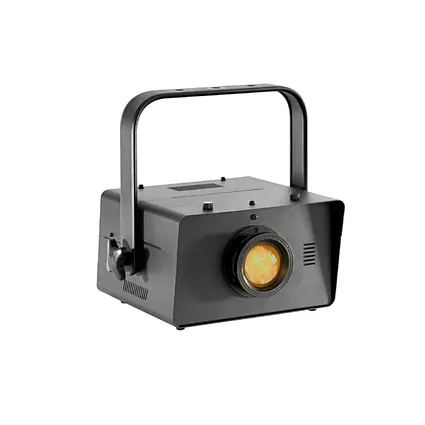
Water effects provided a calmer contrast to fast-moving beams and hectic patterns. They created flowing light structures reminiscent of water surfaces, waves or drifting reflections.
While Derby, Mushroom and Breakdance effects primarily brought energy and movement into a space, water effects created atmosphere. They were suitable for backgrounds, walls and stage scenery and could add greater depth to a scene. Depending on their design, modern LED water effects expand on this principle with flexible color mixing, color wheels and additional control options. Blue and turquoise reinforce the impression of water, while red, orange or amber can make the same movement pattern look almost like flames.
Light, texture and slow movement are enough to visibly transform a space. And sometimes, that does not even require a dedicated effects fixture.
6. The Mirror Ball: Older Than Disco
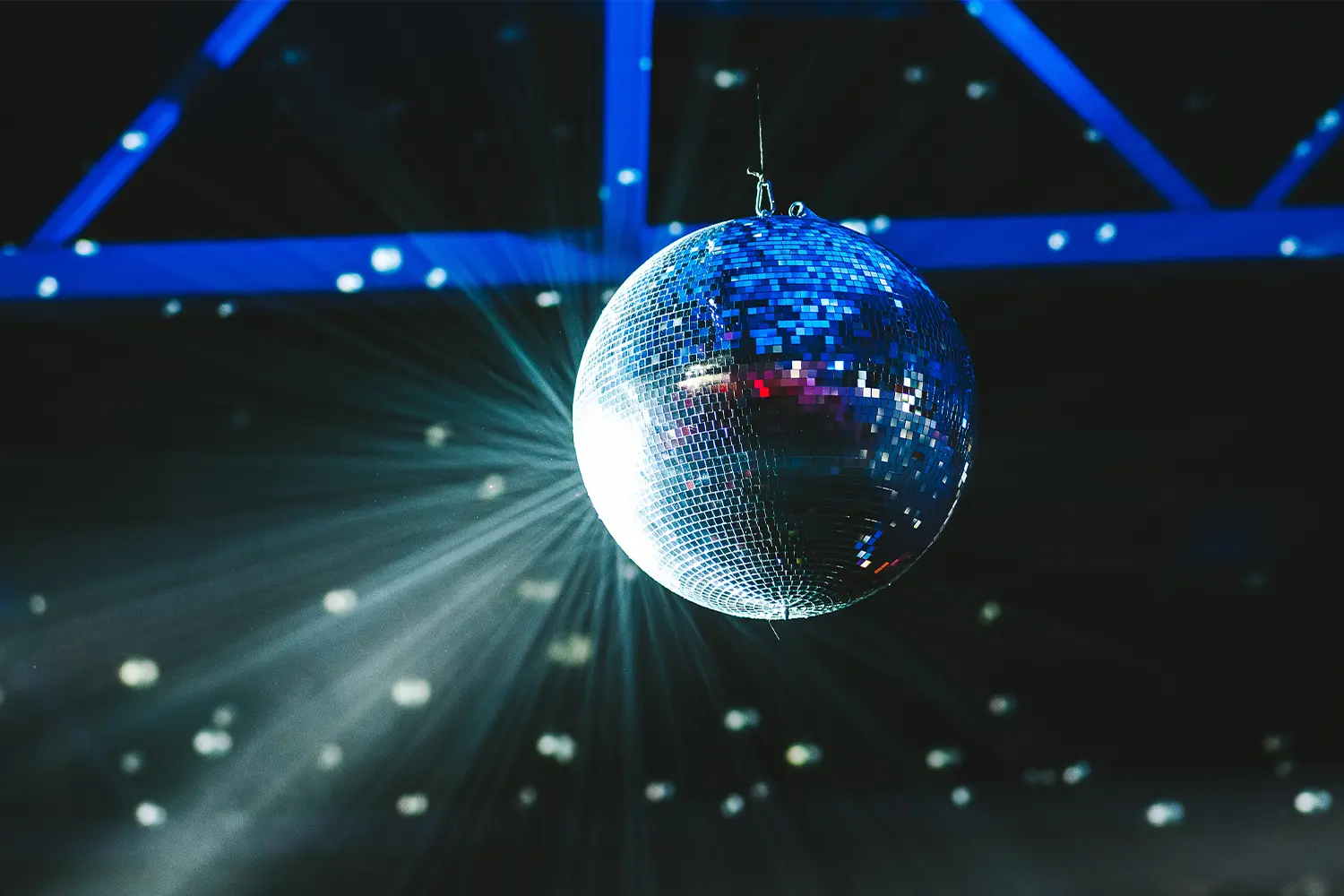
The mirror ball is much older than the 1990s and even predates the disco era. Mirrored rotating spheres had already been used long before then to create moving reflections of light. By the time disco culture took off in the 1970s, the mirror ball had become a symbol of the dance floor and nightlife.
It also remained a familiar feature in many clubs and events throughout the 1990s. Surrounded by scanners, moving heads and colorful effects fixtures, its principle seemed almost surprisingly simple: Rotation, numerous small mirrored surfaces and a precisely aimed beam of light created moving reflections throughout the room.
LED technology has not changed that basic principle. It has, however, expanded the possibilities for illumination. With compact spots, narrow beams and different colors, a mirror ball can now be staged in a classic, understated way or made significantly more dynamic. Few other effects demonstrate so clearly that powerful lighting does not depend on how new the underlying technical idea is.
7. Why Classic Effects Are Interesting Again Today
The renewed interest in classic lighting effects can partly be explained by nostalgia. Retro parties, rediscovered music styles, and the aesthetics of the 1980s and 1990s provide the perfect setting. However, technological development is at least as important.
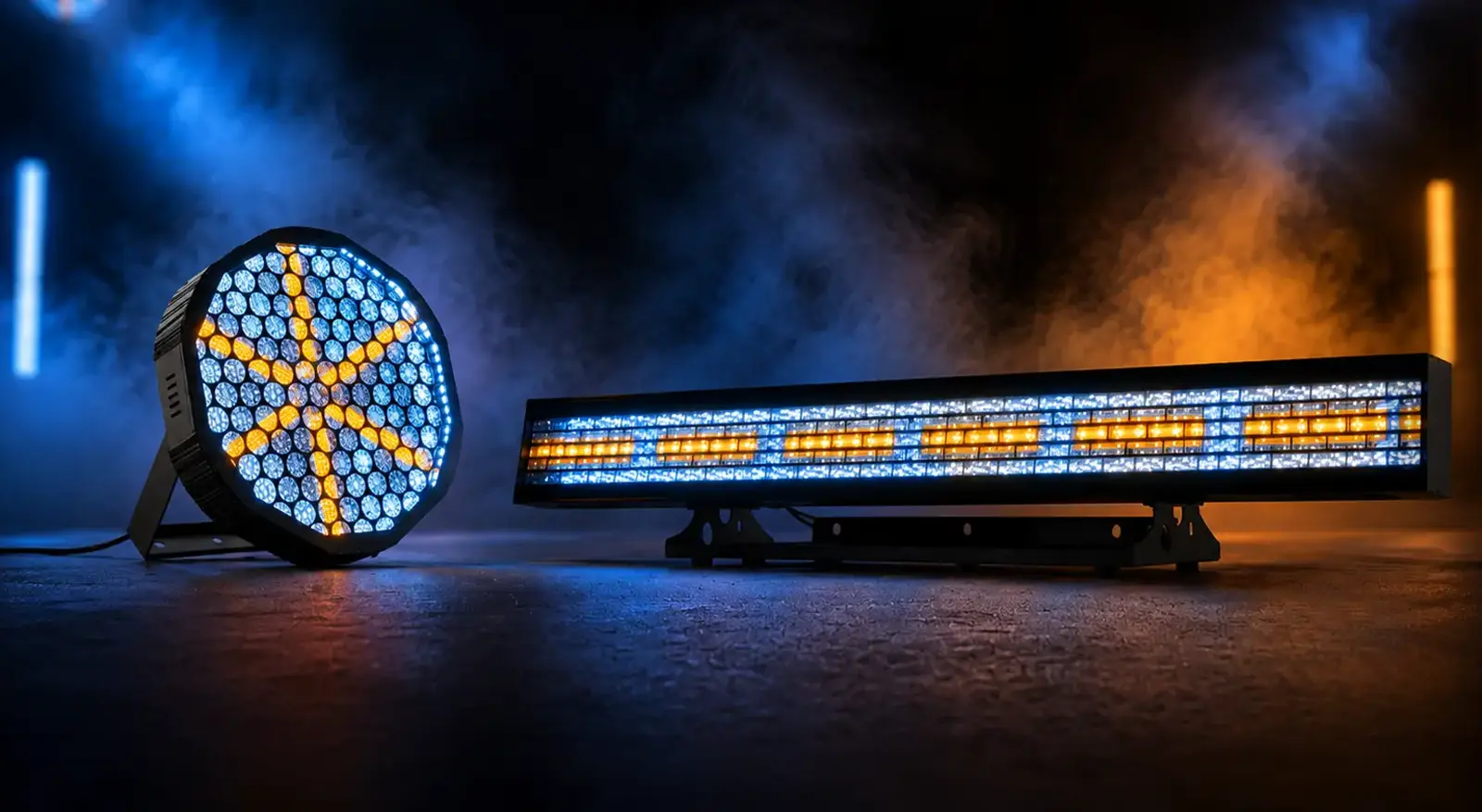
LEDs reduce some of the disadvantages of earlier designs while expanding creative possibilities. Power consumption and heat generation can be lower, colors can be produced or controlled more flexibly depending on the LED and optical system and functions such as dimming, strobe or DMX control can be integrated more easily.
A Derby effect can now become part of a programmed lighting show, a Breakdance effect can combine its characteristic movement patterns with modern color and strobe functions, and a mirror ball illuminated by colored LED spots or narrow beams can look completely different from one lit by a traditional white pinspot. That is exactly where the appeal lies: The lighting looks recall earlier decades, while the technology behind them has long since arrived in the present.
Conclusion: Old Ideas, New Possibilities
Lighting technology continues to evolve. Fixtures become more efficient, control systems become more powerful and shows become increasingly complex. However, good ideas do not necessarily disappear.
Breakdance, Derby, Mushroom, water effects and mirror balls are based on simple principles such as movement, reflection and color. Precisely because their lighting looks are so distinctive, they still work decades later. LED technology has not given these classics a new identity. Instead, it has expanded the possibilities for creating and staging their characteristic lighting looks. That is exactly what makes their comeback so appealing: The look recalls the past, while the possibilities are firmly rooted in the present.